

A splash proof bag protects your belongings from water splashes, light rain, and poolside drips — but it is not designed for full submersion. If you want one bag that handles a beach day, a pool afternoon, or a rainy travel day without fuss, the Beach Bum Bag Original from Beachbumbags is a practical, stylish starting point. Need something that can go underwater? That calls for a true waterproof bag with an IP67 rating or a roll-top dry bag instead.
Table of Contents
- What does “splash proof” actually mean vs. waterproof?
- Which activities are splash proof bags actually good for?
- What features actually determine how well a bag protects you?
- Which bag style should you pick?
- How do you clean and care for a splash proof bag?
- Five questions to ask before you buy a splash proof bag
- Key Takeaways
- The part most buyers overlook
- Beachbumbags has the right bag for your next beach day
- Useful sources
- FAQ
What does “splash proof” actually mean vs. waterproof?
“Splash proof,” “water resistant,” and “waterproof” are not interchangeable, and the difference matters when you are deciding what to carry your phone and wallet in.
Splash proof means the bag can handle:
- Direct splashes from waves or a pool
- Light rain and drizzle
- Spilled drinks or damp towels resting against it
- Condensation from a cold water bottle
It does NOT mean the bag can be submerged, dropped in the ocean, or left in heavy rain for an hour.
Water resistant is a broader, looser term. Most coated fabric bags qualify, but the level of protection varies widely by material and construction. A bag labeled water resistant might repel a quick splash but soak through in sustained rain.
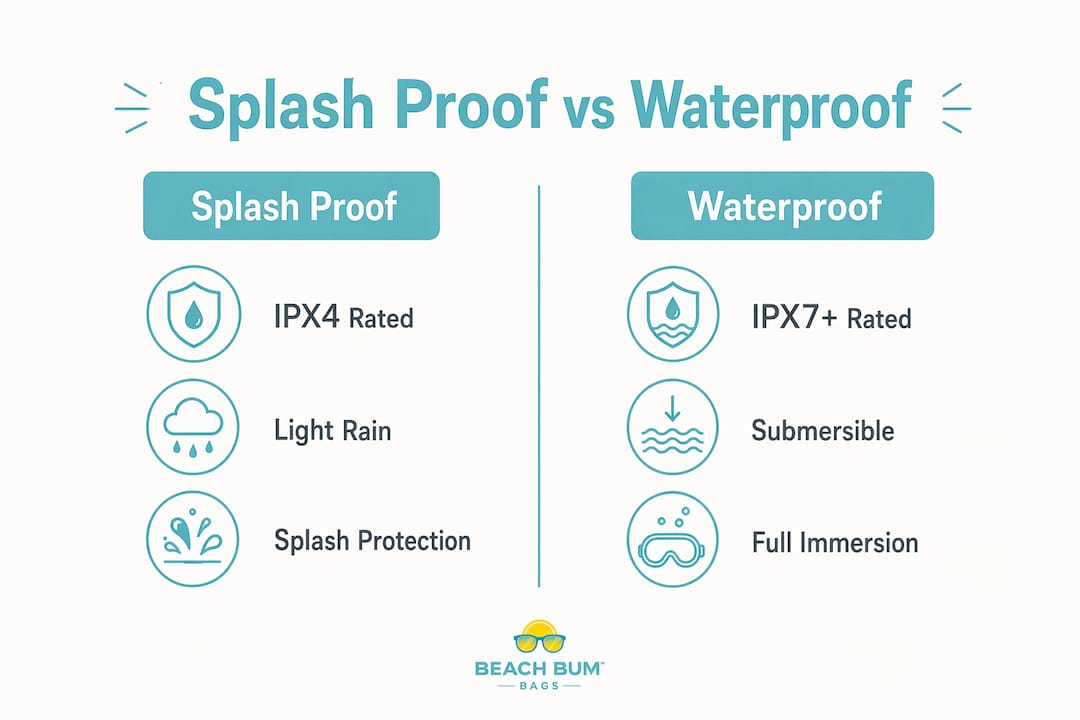
Waterproof (submersible) means the bag can handle full immersion. The standard shorthand here is the IP (Ingress Protection) rating system. IPX4 covers protection from splashing water in any direction, which is what most splash proof bags aim for. IPX7 means temporary immersion protection — 30 minutes at 1 meter depth when properly sealed. IP67 adds dust-tight protection on top of that same immersion standard.
Most beach totes and pouches marketed as “splash proof” target the IPX4 range. They are not tested or rated for IPX7 submersion, so do not assume they are.
Pro Tip: Squeeze the closure firmly and hold the bag under a running faucet for 10 seconds before you trust it with your phone. If water gets in, you know to use an internal dry pouch for valuables.
Which activities are splash proof bags actually good for?
Splash proof bags are the right call for the vast majority of beach and pool days. Here is where they shine and where they fall short.
Great fits:
- Lounging on the beach with waves splashing nearby
- Poolside use where the bag sits on a chair or towel
- Gym bag duty when you are carrying a wet swimsuit home
- Travel carry-on protection from light rain between the car and the terminal
- Day hikes in mild weather
Where they fall short:
- Kayaking or paddleboarding where the bag could go overboard
- Water parks with full-body water rides (check out waterproof bags for water parks for that use case)
- Heavy downpours lasting more than a few minutes
- Any activity where the bag is fully submerged
For valuables like your phone, cards, or cash, pair any splash proof bag with a small internal waterproof pouch or a sealed zip-lock bag. The outer bag handles the splashes; the inner pouch handles the worst-case scenario.
What features actually determine how well a bag protects you?
The label on the hang tag tells you very little. These four features are what actually separate a bag that keeps your stuff dry from one that just looks the part.
Material and construction
Coated fabrics (PU-coated nylon or polyester) and EVA (ethylene-vinyl acetate) are the most common materials in splash proof bags. EVA is rigid, easy to wipe clean, and naturally water-friendly. PU-coated fabric is lighter and more packable. TPU lamination offers a step up in durability and flexibility. High-performance options like X-PAC fabric paired with AquaGuard zippers push into luggage-grade water resistance, though that combination typically comes at a higher price.
Seams
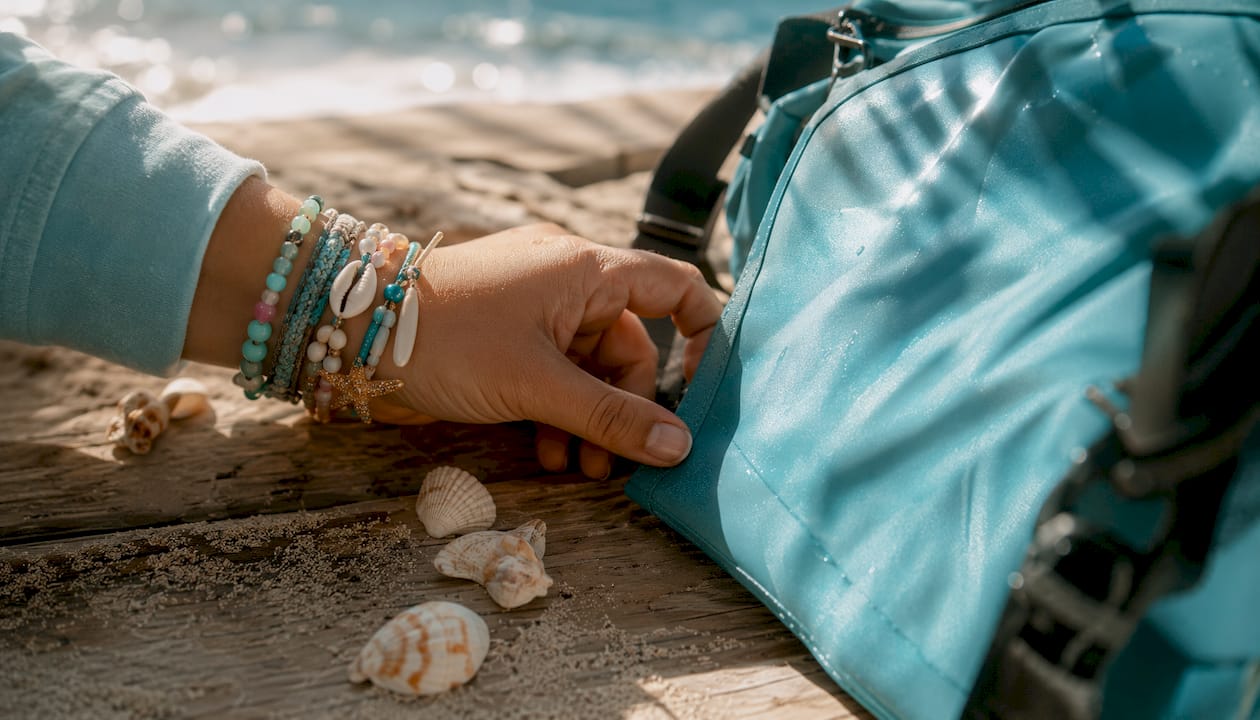
Welded seams are heat-bonded and leave no needle holes for water to enter. Stitched seams, even when taped, are a weak point. For a splash proof bag, welded or heat-sealed seams are the gold standard. Stitched seams with a waterproof coating are acceptable for light splash use but will eventually let water through at the seam line.
Closure type
The closure is where most bags fail. Your options:
- Water-resistant zippers (like YKK Aquaguard): coated to resist water intrusion; good for splash protection but not submersion. See waterproof zipper options for a full breakdown.
- Roll-top closures: fold and clip to create a near-watertight seal; better for submersion risk but bulkier to open and close.
- Snap or magnetic closures: convenient but offer minimal water protection; fine for a dry-side pocket, not for your main compartment.
Wet/dry separation
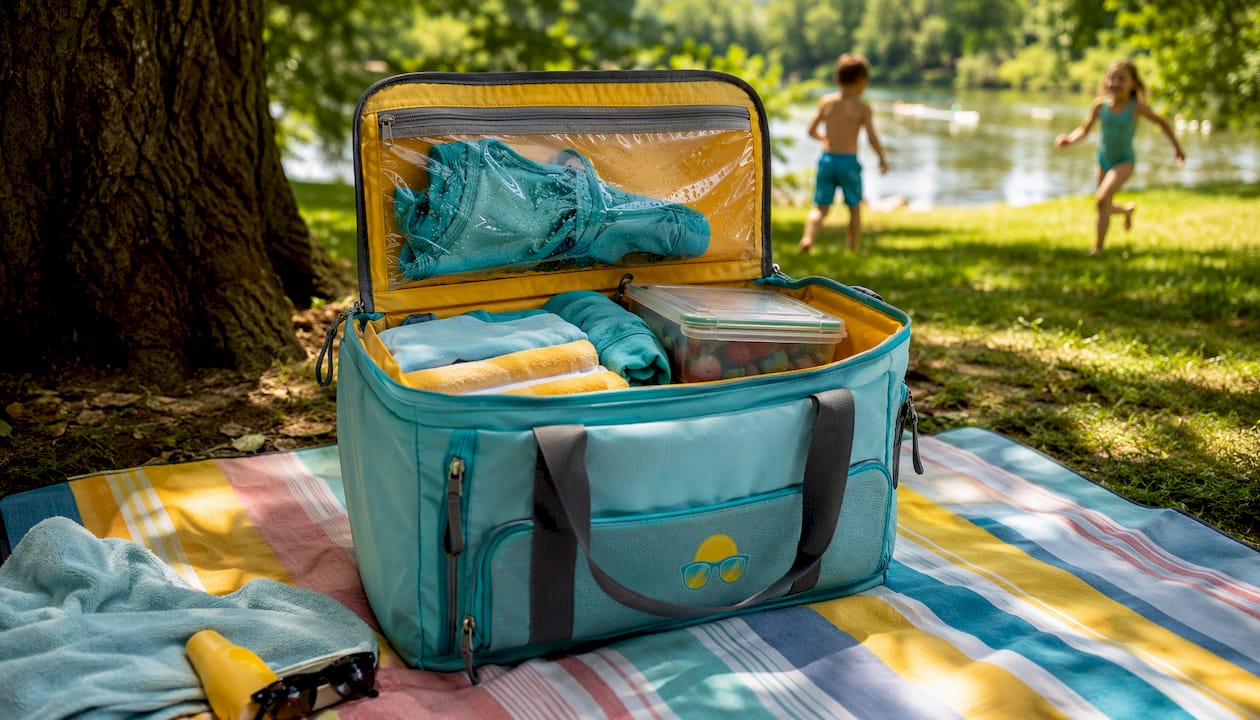
A bag with a dedicated wet pocket or lining lets you toss a damp swimsuit in one side and keep your dry clothes, snacks, and sunscreen in the other. This feature alone makes a beach bag dramatically more useful.
Here is a quick comparison of what to look for across common bag types:
| Feature | Splash Proof Tote | Dry Bag / Roll-Top | Zip Pouch |
|---|---|---|---|
| Best for | Beach, pool, travel | Boating, kayaking | Phones, cards, keys |
| Protection level | Splashes / light rain | Near-submersible | Splash / light rain |
| Material | EVA, coated fabric | TPU, welded nylon | PU-coated fabric |
| Closure | Zipper or snap | Roll-top + clip | Water-resistant zip |
| Wet/dry separation | Often yes | Rarely | No |
| Ease of cleaning | High | Medium | High |
| Typical price range | moderate pricing | — | $10–$30 |
Durable splash proof storage in a moderate price range covers most beach and pool needs well. Heavier-duty waterproof bags with roll-tops or IPX7 ratings typically start at higher prices and can be more expensive.
Which bag style should you pick?
Capacity, protection, and packability pull in different directions, so the right style depends on what you are doing that day.
- Large totes: Roomy enough for towels, sunscreen, snacks, and a change of clothes. Best for full beach days or family outings. Look for structured sides so the bag stands upright on the sand.
- Small pouches: Purpose-built for damp swimwear, cards, keys, or a phone. Usually wipe-clean or machine-washable on a delicate cycle. Great as an inner organizer inside a larger tote. PU-coated materials like those used in lightweight splash resistant pouches keep weight minimal.
- Roll-top dry bags: The right call for boating, kayaking, or any activity where submersion is a real risk. Less convenient for quick access but far more protective.
- Zip pouches: Handy for organizing wet items inside a larger bag. Not a standalone solution for valuables in heavy splash conditions.
| Style | Best activity | Key advantage |
|---|---|---|
| Large tote | Beach day, family outing | Capacity + wet/dry pockets |
| Small pouch | Pool, gym, travel | Compact, easy to clean |
| Roll-top dry bag | Boating, kayaking | Near-submersible protection |
| Zip pouch | Organizing inside a bag | Lightweight, packable |
How do you clean and care for a splash proof bag?
Most splash proof bags do not need anything fancy to stay in good shape. Rinse and air-dry after every beach or pool trip; machine washing is usually fine for small pouches on a delicate cycle, but check the label before you toss a structured tote in the wash.
Standard cleaning routine:
- Shake out sand and debris over a trash can or outside.
- Wipe the interior and exterior with a damp cloth and a small amount of mild dish soap.
- Rinse thoroughly with cool water, making sure soap residue does not stay in the seams.
- Turn the bag inside-out if possible and air-dry completely in a shaded, ventilated spot. Direct sun can degrade coatings over time.
- Leave zippers open while drying to prevent mildew.
Maintenance tips:
- Apply a zipper lubricant (like a beeswax-based product) to water-resistant zippers twice a season to keep them sliding smoothly and maintain their coating.
- Never use bleach or harsh solvents on coated fabrics; they break down the water-repellent finish.
- Store the bag in a ventilated area, not compressed in a drawer, to prevent crease damage to welded seams.
- Small seam separations can often be repaired with seam sealer (available at outdoor gear stores) before they become a bigger problem.
When to replace: If water is soaking through the fabric body (not just a zipper gap), the coating has failed and the bag will not recover with cleaning. Peeling interior lining or cracked EVA panels are also signs it is time for a new one.
Pro Tip: Sunscreen is the number one cause of staining and coating degradation on beach bags. Wipe the interior down immediately after a trip rather than letting sunscreen residue sit.
Five questions to ask before you buy a splash proof bag
Answering these five questions takes under a minute and will save you from buying the wrong bag.
- What will you carry? A phone, wallet, and keys need a different bag than towels, snacks, and a change of clothes. Match capacity to your actual load.
- What is your typical exposure? Poolside splashes and light rain call for a standard splash proof bag. Kayaking or water parks call for a waterproof beach bag with a roll-top or IP rating.
- Do you need internal wet/dry separation? If you carry a damp swimsuit alongside dry items, this feature is non-negotiable.
- Which closure works for your routine? A roll-top is more protective but slower to open. A water-resistant zipper is faster but less secure in heavy splash conditions.
- What is your budget and what warranty comes with it? A bag in a moderate price range should last multiple seasons with proper care. Check whether the brand offers any warranty or repair support.
In-store or unboxing checks: Run your fingers along every seam to feel for gaps or loose adhesive. Open and close the zipper several times; it should glide without catching. Smell the interior — a strong chemical smell can indicate a low-quality coating that may degrade quickly. For a deeper look at waterproof alternatives and comparisons, Beachbumbags has a full guide worth bookmarking.
For valuables, always pair your splash proof bag with a small internal waterproof pouch. The outer bag handles everyday splashes; the pouch is your backup if a wave catches you off guard.
Key Takeaways
A splash proof bag handles everyday beach and pool splashes well, but pairing it with an internal dry pouch and choosing welded seams plus a quality closure is what keeps your valuables genuinely safe.
| Point | Details |
|---|---|
| Splash proof vs. waterproof | Splash proof covers splashes and light rain (IPX4 range); submersion needs IPX7 or a roll-top dry bag. |
| Top features to inspect | Welded seams, water-resistant zipper or roll-top closure, and a dedicated wet/dry pocket matter most. |
| Test before you trust | Run the closure under a faucet for 10 seconds; if water enters, use an internal dry pouch for valuables. |
| Care extends lifespan | Rinse after every use, air-dry inside-out, and avoid bleach to preserve the water-repellent coating. |
| Beachbumbags recommendation | The Beach Bum Bag Original offers easy-clean materials, wet/dry separation, and beach-ready style for everyday splash protection. |
The part most buyers overlook
Most shoppers focus on the fabric label and ignore the closure. That is backwards. A bag made from premium coated nylon with a cheap, uncoated zipper will let water in at the pull tab every single time. The zipper is the weakest link in almost every splash proof bag on the market, and it is the one thing you can test in 10 seconds before you buy.
The other thing worth saying plainly: “splash proof” is a marketing term, not a tested standard. Unlike IP ratings, which follow IEC 60529 testing protocols, “splash proof” has no universal definition. Two bags with identical hang tags can perform very differently. That is not a reason to avoid splash proof bags — for beach and pool use, they are exactly what most people need. It just means you should trust the construction details (seam type, zipper coating, material) more than the label itself.
Beachbumbags builds bags for exactly this use case: a real beach day, not a scuba dive. The focus on easy-clean materials, wet/dry separation, and durable construction reflects what actually matters for the 99% of beach trips that involve splashes and sand, not submersion.
Beachbumbags has the right bag for your next beach day
You have done the research. Now you need a bag that actually delivers on it. Beachbumbags designs its bags specifically for beach and pool use — not as an afterthought, but as the whole point. The Beach Bum Bag Original is a roomy, structured tote with easy-clean materials, wet/dry separation, and the kind of style that looks good on the sand and in your Instagram feed. It holds everything you need for a full day out: towels, sunscreen, snacks, a change of clothes, and your phone.
The smaller grab-and-go option works perfectly as a poolside pouch or a travel carry-on companion for light rain days. Both bags are built to rinse clean, stand up to repeated beach trips, and keep your dry stuff dry. Beachbumbags also offers custom logo beach bags for teams, schools, and businesses if you need bags in bulk. Shop the Beach Bum Bag Original today and see why customers keep coming back for more.
Useful sources
- Beach Bum Bag Original — Beachbumbags: Primary product page for the flagship tote; material specs, wet/dry features, and customer reviews.
- Best Waterproof Bag Zipper Options — Beachbumbags: Technical breakdown of zipper types and how they affect water protection.
- Top 6 Waterproof Pouch Alternatives — Beachbumbags: Comparison of pouch styles and protection levels for shoppers weighing their options.
- Best Waterproof Bag for Water Parks — Beachbumbags: Situational guide for activities that require submersion-level protection beyond splash proof.
- The Ultimate Guide to the Best Waterproof Beach Bags — Beachbumbags: Long-form comparison of waterproof beach bag types and when to upgrade from splash proof.
- ORTLIEB Atrack Metrosphere — ORTLIEB: Reference for IP rating definitions (IPX4 splash protection standard).
- Panga 28L Waterproof Backpack — YETI: Reference for IPX7 submersion standard and the importance of closure type in waterproof claims.
- GR2 Waterproof X-PAC — GORUCK: Example of high-performance material and zipper pairing (X-PAC fabric + AquaGuard zipper) for luggage-grade water resistance.
- Splash Proof Pouch — Papinelle: Care and construction reference for small splash proof pouches.
- Kids waterproof rain pants — Minoti: Market context for consumer demand in water-resistant accessories and apparel.
FAQ
What is the best waterproof bag for swimming?
For actual swimming or any activity where the bag may be submerged, you need a bag rated IPX7 or higher with a roll-top closure, not a standard splash proof bag. Beachbumbags’ totes are designed for poolside and beach splash protection, not submersion.
Do splash proof bags really work?
Yes, for their intended use. A quality splash proof bag with welded seams and a water-resistant zipper handles poolside splashes, light rain, and damp towels reliably. They are not rated for submersion, so keep valuables in an internal dry pouch as a backup.
How do you keep money dry while swimming?
The most reliable method is a small sealed waterproof pouch or a zip-lock bag tucked inside your splash proof bag, left on a chair or towel while you swim. Never rely on the outer bag alone for cash or cards if you are in the water.
What is better than a standard beach tote for water protection?
A roll-top dry bag offers significantly more protection for activities like kayaking or paddleboarding where submersion is possible. For everyday beach and pool days, a structured splash proof tote with wet/dry separation, like the Beach Bum Bag Original, covers everything most people actually need.
0 comments