

What is a submersible waist pack and why does it matter at the beach?
A submersible waist pack is a fully waterproof bag engineered to keep your belongings dry even during complete water immersion. Unlike a basic water-resistant pouch that handles splashes, a true submersible fanny pack is built with airtight zippers and RF-welded seams that block water at every seam and closure point. Many models also float, so if your pack slips off in the surf, it stays on the surface instead of sinking with your phone and keys inside.
For beach-goers, that combination of features matters more than it might seem. Sand, salt spray, and unexpected waves are a constant reality, and a regular bag just isn’t built for that environment. Here’s what sets a submersible waist pack apart:
- Fully waterproof construction tested for immersion, not just rain
- Airtight zippers that seal out both water and fine sand particles
- RF-welded seams that eliminate stitched holes where water can seep in
- Floating capability that keeps valuables on the surface if the pack enters the water
- Hands-free wear that lets you swim, snorkel, or paddle without holding anything
Beachbumbags designs its waterproof bags with exactly this kind of beach-first thinking, combining real protection with styles you’ll actually want to carry.
Table of Contents
- Key features that make a waist pack truly submersible
- Why waterproofing alone isn’t enough for a day at the beach
- How to choose the right submersible waist pack for your beach activities
- Why Beachbumbags are a top pick for beach-ready waterproof packs
- Beachbumbags has the waterproof beach bag you’ve been looking for
- FAQ
- Key Takeaways
Key features that make a waist pack truly submersible
Not every bag labeled “waterproof” can handle full submersion. The difference comes down to specific construction details that either hold up underwater or don’t.
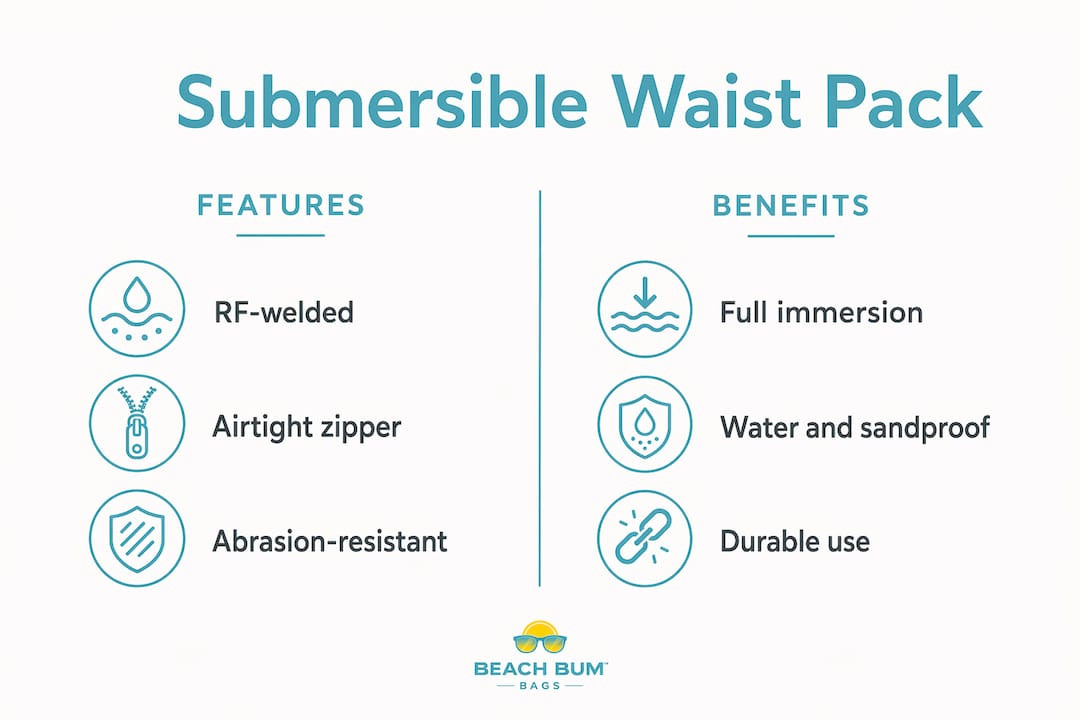
RF-welded seams are the foundation. Traditional stitching leaves tiny needle holes that water exploits under pressure. Radio-frequency welding fuses the material together at a molecular level, creating a continuous barrier with no gaps. Paired with that, TRU Zip airtight zipper technology creates a watertight seal at the closure point, the most common failure spot on standard bags.
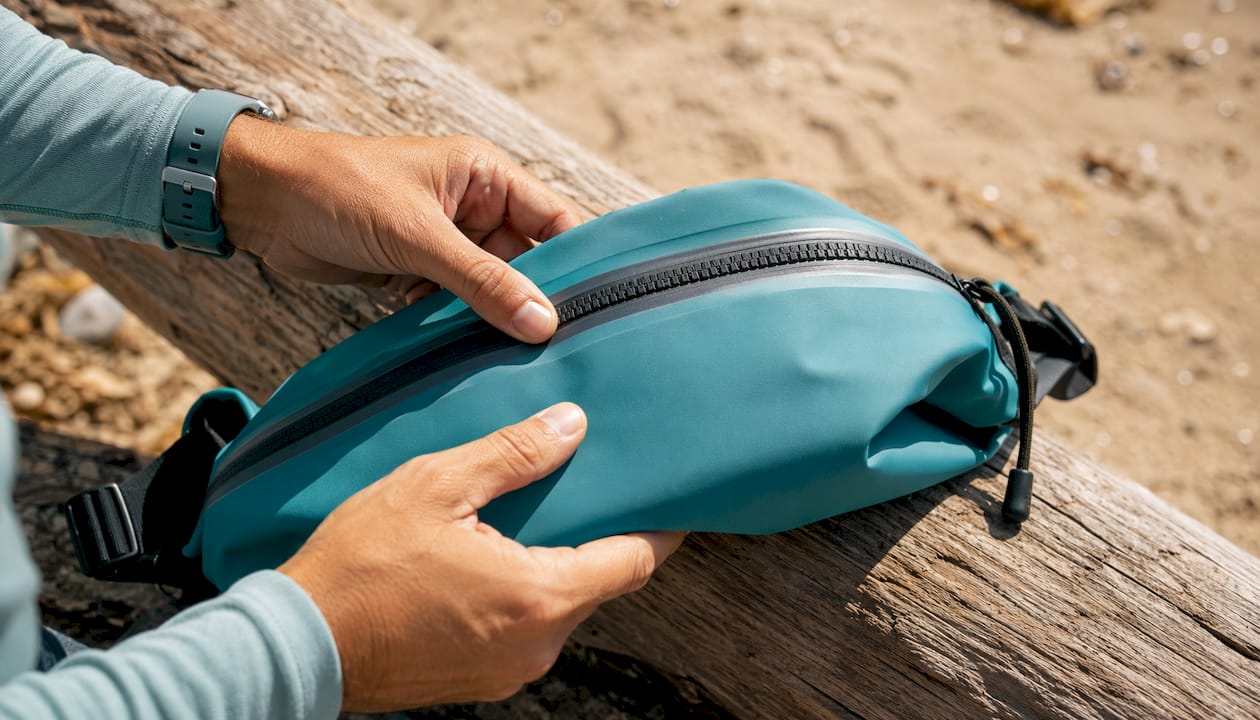
Floatation is another defining feature. Most quality submersible packs are designed to float if dropped in water, giving you a real safety net for your valuables. That said, overloading the pack with heavy items can reduce flotation and cause sinking, so testing buoyancy before a water activity is a smart habit.
Here’s a quick checklist of features to look for:
- RF-welded or heat-bonded seams (not stitched)
- Airtight zipper with a confirmed stop point
- IP67 or higher rating confirming tested submersion performance
- Buoyant materials or a built-in air chamber
- Touchscreen-compatible window for phone access without opening the pack
Pro Tip: Lubricate your airtight zipper regularly with a zipper-specific lubricant to prevent salt and sand buildup from stiffening the seal. A stiff zipper is often the first sign that waterproof integrity is at risk.
Why waterproofing alone isn’t enough for a day at the beach
Water isn’t the only threat your gear faces on the sand. Fine beach sand is surprisingly destructive. It works its way into zipper teeth, scratches camera lenses, clogs charging ports, and grinds against interior surfaces. A bag that handles rain but uses a standard zipper will still let sand in with every reach inside.
Airtight, submersible zippers protect electronics from sand infiltration that can damage lenses or ports. The same seal that blocks water under pressure also blocks particles too fine to see. That dual protection is what makes a true submersible waist pack the right call for a full beach day, not just a quick dip.
Consider these real beach scenarios where sand protection matters as much as waterproofing:
- Beach photography: Sand in a lens or port can cause permanent damage
- All-day coastal outings: Repeated openings expose the interior to blowing sand
- Windy conditions: Airborne particles reach into any unsealed gap
- Post-swim access: Wet hands carry sand directly into a standard zipper
Material durability matters here too. Abrasion-resistant fabrics hold up when the pack rubs against wet sand, rocks, or a paddleboard surface. Look for reinforced materials on the base and sides, not just the main body.
How to choose the right submersible waist pack for your beach activities
The best waterproof belt bag for you depends on what you’re actually doing at the beach. A snorkeler has different needs than someone spending the day at a resort pool. Here’s how to match features to your plans:
- Verify the IP rating. IP67 confirms tested waterproofing under immersion; marketing claims without a rating are unverified. Always check for an official certification.
- Consider modular design. Removable waist belts add versatility for activities where a chest carry or crossbody position works better.
- Match size to your essentials. A compact swimming waist pouch works for a phone, keys, and cards. A larger pack fits sunscreen, a snack, and a small camera.
- Check strap comfort. Adjustable, padded straps make a real difference on a long beach day. A pack that digs in after an hour gets left behind.
- Look for interior organization. Attachment points for keys and card slots keep small items from shifting around inside.
- Assess flotation for your activity. If you’re kayaking or paddleboarding, a floating waist pack is a genuine safety feature, not just a bonus.
For waterproof accessories that pair well with a beach pack, waterproof jewelry brands follow similar certification logic, making it easy to build a fully water-safe kit for the beach.
Why Beachbumbags are a top pick for beach-ready waterproof packs
Beachbumbags builds its bags around one clear goal: keeping your belongings safe from water and sand without sacrificing style. The Beach Bum Original tote is the brand’s flagship, offering a roomy, structured design that stands up to full beach days. The Beach Bum Mini is the grab-and-go option, sized perfectly for essentials like your phone, sunscreen, and a snack.
Both models reflect the brand’s signature teal-turquoise palette and sun-soaked aesthetic. These aren’t bags you’ll want to hide at the bottom of your beach chair.
Customer feedback on Beachbumbags’ waterproof performance and design points to the same theme: the bags do what they promise, and they look good doing it. For beach-goers who’ve dealt with a soaked phone or a sand-filled bag before, that reliability is the whole point.
Pro Tip: Pair the Beach Bum Mini with the Beach Bum Original for a full beach kit. Keep valuables like your phone and cards in the Mini for water activities, and use the Original for towels, snacks, and gear on the sand.
Beachbumbags has the waterproof beach bag you’ve been looking for
You’ve done the research. Now it’s time to grab a bag that actually holds up.

Beachbumbags offers the Beach Bum Original and Beach Bum Mini for beach-goers who want real waterproof protection without giving up style. Both bags are built for the realities of a beach day: water, sand, sun, and everything in between. The brand also carries bag accessories like phone attachments and decorative charms to personalize your setup. Whether you’re heading to the shore for a quick afternoon or a full week at the coast, Beachbumbags has a waterproof option sized for your needs. Browse the full collection at beachbumbags.com and find the bag that fits your beach day.
FAQ
What makes a waist pack truly submersible vs. water-resistant?
A submersible waist pack uses RF-welded seams and airtight zippers to withstand full immersion, while a water-resistant bag only handles splashes. Look for an IP67 rating or higher to confirm tested submersion performance.
Do submersible waist packs float?
Most are designed to float if dropped in water, but overloading with heavy items can reduce buoyancy. Test your packed bag in a controlled setting before relying on flotation during water activities.
Can a submersible waist pack protect against sand as well as water?
Yes. The same airtight zipper seal that blocks water also prevents fine sand particles from entering, protecting electronics like phones and cameras from abrasion damage.
How do I maintain the waterproof seal on my waist pack?
Lubricate the airtight zipper regularly with a zipper-specific lubricant, and always close the zipper fully to the stop point before entering water. Salt and sand buildup are the most common causes of seal failure.
What size submersible waist pack do I need for the beach?
A compact pack fits a phone, keys, and cards for swimming or snorkeling. A larger model accommodates sunscreen, a small camera, and snacks for a full day on the sand.
Key Takeaways
A submersible waist pack with RF-welded seams and an airtight zipper is the only reliable way to protect your phone, cards, and keys from both water and sand at the beach.
| Point | Details |
|---|---|
| Submersible vs. water-resistant | Submersible packs have IP-rated seams and airtight zippers; water-resistant bags only handle splashes. |
| Sand protection matters too | Airtight zippers block fine sand particles that damage electronics and clog ports. |
| Flotation is a safety feature | Most submersible packs float, but heavy loads can reduce buoyancy, so test before water use. |
| Zipper maintenance extends lifespan | Regular lubrication and full closure to the stop point preserve the waterproof seal. |
| Beachbumbags for beach days | The Beach Bum Original and Beach Bum Mini offer waterproof protection with beach-ready style. |
0 comments